
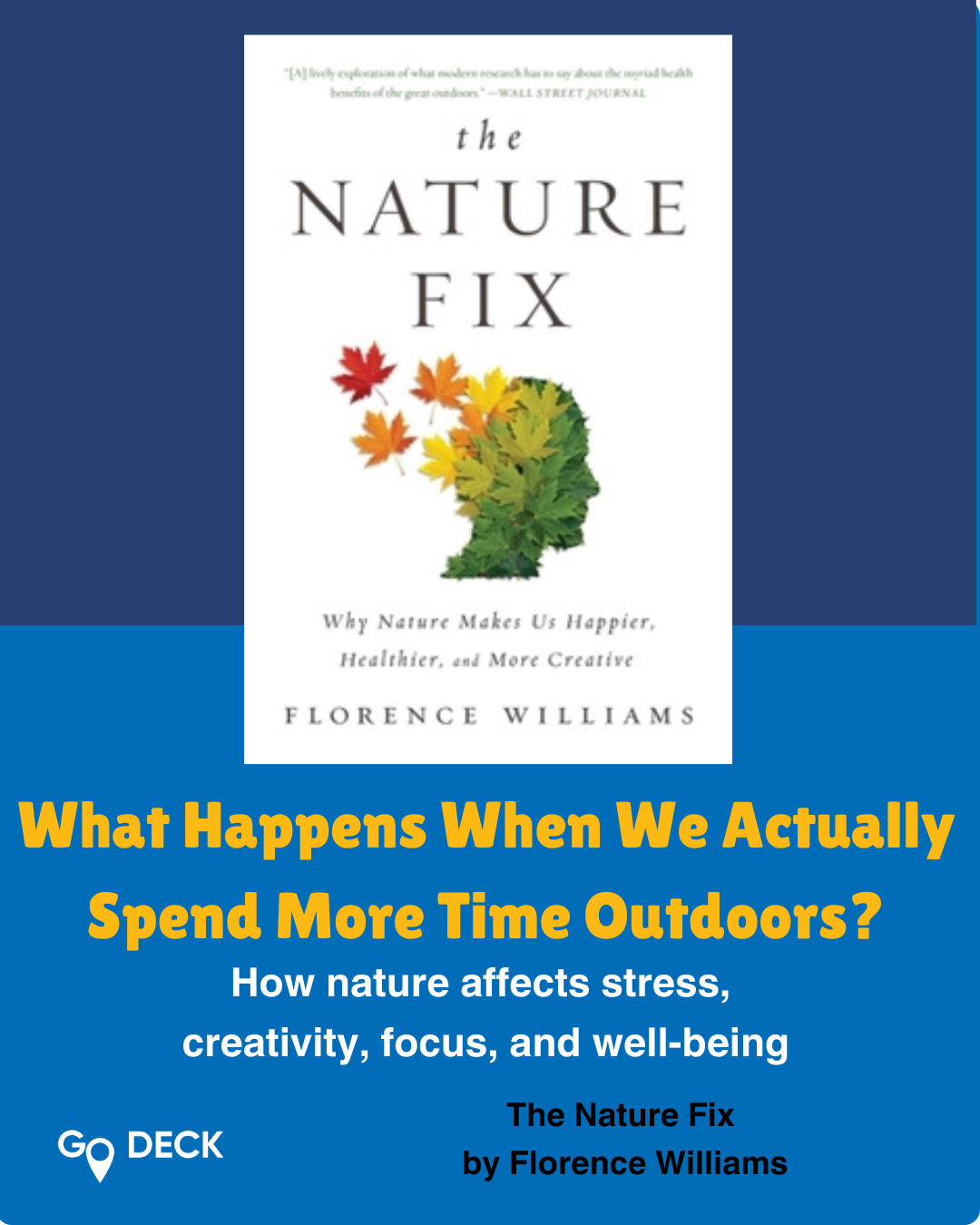
By the time I picked up The Nature Fix by Florence Williams, I'd already read books explaining why nature matters.
I've read about the neuroscience. I've read about the health benefits. I've read the studies linking green spaces to improved well-being.
But one question remained: What happens when people actually start spending more time outdoors?
That's the question Williams set out to answer.
Part science journalist, part travel writer, and part curious participant, Williams travels around the world exploring how different cultures use nature to improve human health and well-being. Along the way, she investigates everything from Japan's forest bathing movement to wilderness programs designed to boost creativity and cognitive performance.
The result is one of the most practical and engaging books I've read on the relationship between people and the natural world.

The Big Idea
If Good Nature explains the science behind nature's health benefits, The Nature Fix explores what those benefits look like in real life.
Williams doesn't simply tell readers that nature is good for them. She visits researchers, participates in studies, and experiences nature-based interventions firsthand. And time and again, she finds evidence that time outdoors can influence how we think, feel, and function.
The takeaway is surprisingly simple: Nature isn't just something pleasant to look at. It's something our brains and bodies actively respond to.
Forest Bathing: More Than a Walk in the Woods
One of the book's most memorable sections explores the Japanese practice of "forest bathing," or shinrin-yoku.
Despite the name, there's no actual bathing involved. Forest bathing simply means slowing down and immersing yourself in a natural setting using all of your senses.
Participants walk slowly, notice the sights and sounds around them, breathe deeply, and allow themselves to be fully present in the environment.
What surprised me was how much research supports the practice. Studies have found that time spent in forests can reduce stress hormones, lower blood pressure, improve mood, and promote relaxation.
In American culture, we are often encouraged to move faster. Forest bathing offers a radically different approach: slow down and pay attention.
Nature as a Stress Antidote
Throughout the book, Williams repeatedly returns to one theme: modern life is mentally exhausting.
Notifications, traffic, deadlines, screens, and constant decision-making place continuous demands on our attention. BUT Nature appears to provide relief.
Researchers featured in the book found that spending time in natural environments can help calm the nervous system and reduce mental fatigue.
And my big takeaway...the effects don't necessarily require a remote wilderness experience. Many benefits can occur in local parks, urban green spaces, and nearby trails!
In other words, you don't have to disappear into the mountains for a week to experience nature's benefits. You simply need to make room for nature in your everyday life.
Creativity Thrives Outdoors
One of the most fascinating topics Williams explores is creativity.
Several researchers suggest that stepping away from screens and spending time in nature may improve creative thinking and problem-solving. Some studies have found that participants perform better on creativity tasks after spending extended time outdoors.
While the exact mechanisms are still being studied, the idea makes intuitive sense. When we're constantly processing emails, notifications, and information, our brains rarely have opportunities to wander. Nature creates space for reflection, curiosity, and new connections between ideas.
I can attest to this - some of my best thoughts happen when I'm not trying so hard to think.
Better Attention and Cognitive Performance
Williams also explores research on attention restoration.
Modern environments constantly compete for our focus. Billboards, alerts, advertisements, and screens all demand mental energy. That's not how nature works.
Natural settings tend to capture our attention gently rather than forcefully. Researchers call this "soft fascination."
Instead of draining our mental resources, nature replenishes them. This may explain why people often report feeling mentally refreshed after spending time outdoors, even if they weren't doing anything particularly strenuous.
What I'm Taking Away
The biggest lesson I took from The Nature Fix is that nature doesn't have to be extreme to be effective. It could be a neighborhood walk, a local trail, a lunch break in the park, or an afternoon spent exploring a place you've never visited before.
These experiences may seem small, but the evidence suggests they can meaningfully influence stress levels, creativity, focus, and overall well-being.
The challenge isn't finding extraordinary outdoor adventures; it's making outdoor experiences a regular part of life.
But hey! Look on the bright side, that's something most of us can start doing today.



Share:
Meet the People Behind The GO Deck: Kylie Johnston
Zephyrene Can Inspire Outdoor Exploration, Curiosity, and Connection