
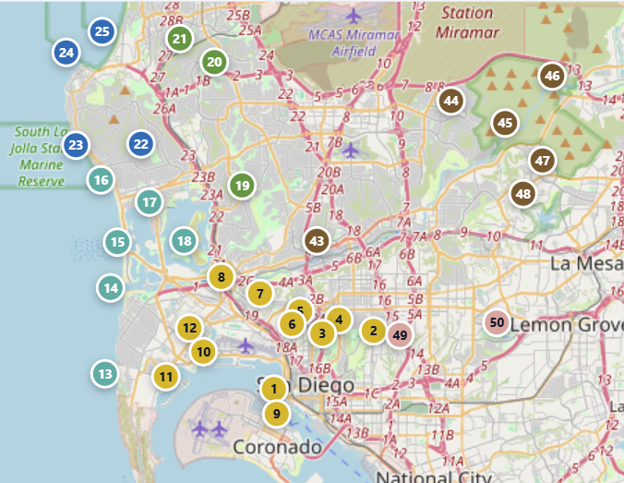
Our collaboration with La Costa Canyon High School student, Sakee Kromydas, was covered by CBS8. Sakee helped us build a free interactive map to 52 outdoor spots in San Diego County, addressing a top barrier to getting outside.
Here's the full transcript from our feature:
A North County teen is helping more San Diegans get outdoors, one pin at a time.
Sakee Kromydas, a 16-year-old robotics student at La Costa Canyon High School, spent two weeks building a free interactive map featuring 52 outdoor destinations across San Diego County, from canyons and lagoons to lakes and ecological reserves. Users can click a pin, pull up a list of nearby attractions, and get instant navigation to the spot.
The idea started with Deanna Ratnikova, founder of the San Diego company GO Deck, which sells card decks featuring local outdoor spaces. Ratnikova said users loved the concept but still hesitated to head out the door because they weren't sure exactly where to go or how to get there.
She'd been wanting to build a digital map for more than a year but didn't know a coder, until a mutual friend introduced her to Kromydas.
Together, they mapped out 52 locations spanning Del Mar to the South Bay. About half the spots are wheelchair and stroller friendly, and many include restrooms, making the map useful for families and people with mobility considerations.
The map is free to use, with no purchase required.
The project comes as the San Diego Natural History Museum, known as The Nat, released a new report called "Anchoring Healing Through Nature in San Diego County." The study, part of the museum's Anchoring Healing Through Nature initiative, gathered feedback from more than 500 participants and found that not knowing where to go or how to prepare for outdoor activities is one of the biggest barriers keeping people from spending more time in nature. Other barriers included parking and entrance fees, transportation challenges and a lack of information about available spaces.
Ratnikova said getting people outdoors matters beyond a single visit.
"When people get outdoors and they discover these wonderful places, that becomes places they want to protect, places that they want to take care of," she said.
For Kromydas, the collaboration was about more than a coding exercise.
"It wasn't just like making some coding project. It was also impacting real people," he said. "So that made it a little bit more special to me."
Ratnikova said working with Kromydas gave her hope for future generations.
"It changed my perspective of the youth and the future that we have," she said. "You give them a problem, and they really come up with a solution. So it gives me a lot of hope for the future."

Share:
Nature Teaches Us How to Belong: A Book Review of The Serviceberry
Meet the People Behind The GO Deck: Kierstyn Beck