
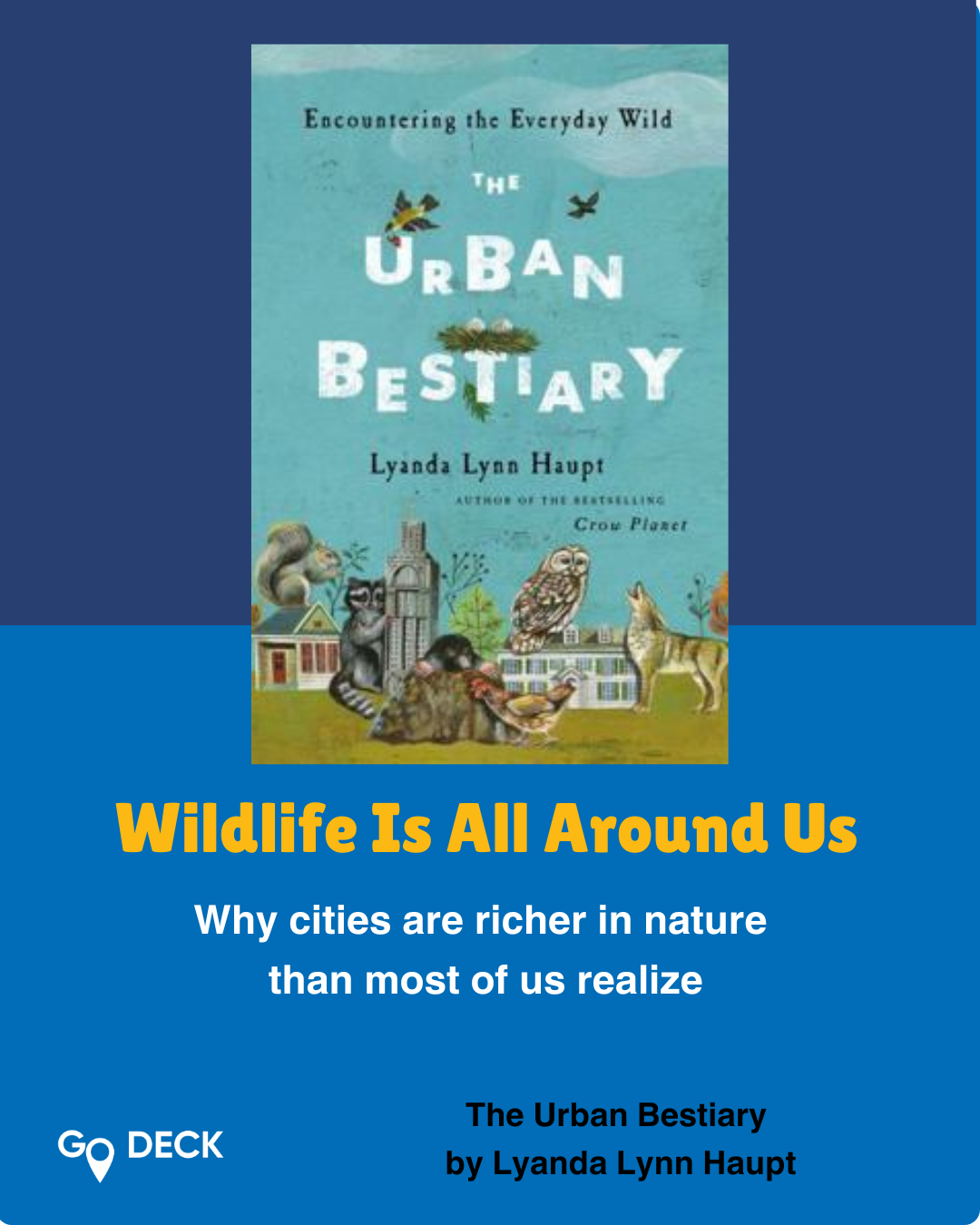
When people imagine wildlife, they often picture remote forests, rugged mountains, or vast national parks. Rarely do they think about parking lots, sidewalks, apartment complexes, or city streets.
Yet according to naturalist and author Lyanda Lynn Haupt, wildlife is already living alongside us in these places. We simply haven't learned to see it - or when we do see it, we're in a state of surprise or shock.
In The Urban Bestiary, Haupt introduces readers to the fascinating animals that inhabit our cities and suburbs—from crows and coyotes to raccoons, pigeons, opossums, and countless other creatures that have adapted to life among humans.
The book challenges the common assumption for urban dwellers...that nature exists somewhere else. Instead, Haupt argues that the natural world is woven into our daily lives, even in the most developed environments.

The Big Idea
At its core, The Urban Bestiary is about changing the way we see our surroundings.
When I moved into a dense apartment complex, I thought, "I'm separated from nature."
I would go to the mountains or the desert for my weekend nature fix. I felt that nature was found in the forests and wilderness areas. It was "out there."
Haupt encourages readers to abandon that mindset because the truth is that cities are ecosystems too. Birds nest on buildings. Pollinators visit urban landscaping. Coyotes navigate greenbelts and neighborhoods....one passes through by my office every day around sunset!
Foxes, raccoons, squirrels, rabbits, and countless other species have learned to coexist alongside humans. Once we begin looking for them, evidence of wildlife (well, mainly scat) appears almost everywhere.
Cities Are More Alive Than We Realize
One of the most fascinating aspects of the book is the way Haupt reveals the hidden lives unfolding around us.
Most of us move through our daily routines focused on destinations. We're commuting, running errands, walking the dog, or checking our phones. Meanwhile, entire ecological dramas are taking place unnoticed - like the hawk hunting from the telephone pole, the spider building a web between two shrubs, the hummingbird visiting flowers along the busy sidewalk.
The city isn't empty of nature. Rather, it's full of stories we're just too distracted to notice.
Learning to Live Alongside Wildlife
Another theme woven throughout the book is coexistence. Urban wildlife can sometimes create challenges. Animals don't always behave in ways that are convenient for humans.
Haupt, however, encourages readers to move beyond viewing wildlife as either a nuisance or a novelty. She advocates for understanding.
The more we learn about the animals around us, the better equipped we are to coexist with them. Knowledge often replaces frustration with appreciation.
What first appears to be a problem becomes an opportunity to better understand the ecosystem we share.
Curiosity Changes Everything
Much like The Comfort of Crows and The Backyard Bird Chronicles, this book highlights the power of curiosity.
The difference is that Haupt directs that curiosity toward places many people overlook like a vacant lot, a neighborhood greenbelt, a drainage channel, the trees outside my office!
These places may not look like traditional nature destinations, but they are often filled with life. And the more curious we become, the more interesting our everyday surroundings appear.
Why This Book Resonated With Me
One reason I enjoyed The Urban Bestiary is that it aligns closely with what I've observed through The GO Deck.
Many people assume they need to travel long distances to connect with nature. Yet some of the most meaningful discoveries happen surprisingly close to home.
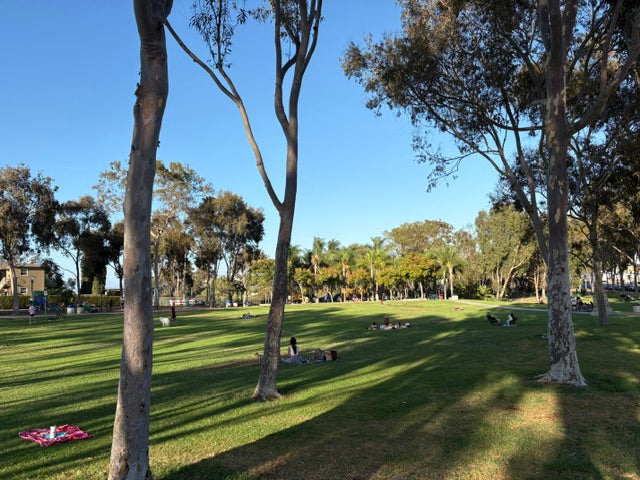
When we slow down and explore nature spaces near our homes, we might spot a heron along an urban creek. We might discover bees in a community garden. We might notice a hawk perched above a busy street.
These encounters often feel memorable precisely because they happen where we least expect them. This book reminds us that nature doesn't disappear when buildings appear...it adapts.
Reframing What Counts as Nature
Perhaps the most valuable lesson from The Urban Bestiary is that nature connection doesn't require pristine wilderness.
Of course, wild places are important and worth protecting. But if we define nature too narrowly, we risk overlooking the countless opportunities for connection available every day.
Urban nature may look different than wilderness, but that doesn't make it less meaningful. In fact, for many people, urban nature is the nature they experience most often, and sometimes, it may be the only nature they experience.


Share:
The Best College Gift Isn’t Another Gadget - It’s a Way to Feel at Home
Beyond Gift Cards: Why The GO Deck Makes a Meaningful Client & Employee Gift